CT Angiography vs Traditional Angiography: Which Is Better for Diagnosing Vascular Disease?
Book Your CT Angio now at affordable prices
Vascular disease can affect blood flow and increase the risk of serious health problems if left untreated. Doctors use different imaging tests to identify narrowed or blocked blood vessels and plan the right treatment. Read on to learn how CT angiography and traditional angiography work, how they differ, and which test may be used for diagnosing vascular disease. Knowing the strengths of each imaging method can help patients feel more informed during the diagnostic process.
What Is Vascular Disease?
Vascular disease refers to a group of conditions that affect the blood vessels, including arteries and veins, throughout the body. These conditions can reduce or block blood flow, affecting the delivery of oxygen and nutrients to organs and tissues. Vascular disease may develop gradually due to plaque buildup, blood clots, or weakened blood vessel walls. Early diagnosis helps detect circulation problems before they lead to serious health complications.
Types of Vascular Disease
- Peripheral artery disease affects blood flow to the legs
- Coronary artery disease affects arteries supplying the heart
- Carotid artery disease affects blood flow to the brain
- Aortic aneurysm causes weakening of the aortic wall
- Deep vein thrombosis involves blood clots in veins
- Chronic venous insufficiency affects normal vein circulation
- Peripheral venous disease impacts blood return from limbs
Symptoms That May Require Vascular Imaging
- Leg pain during walking or exercise
- Chest pain or chest discomfort
- Sudden weakness on one side
- Numbness in arms or legs
- Cold feet or poor circulation
- Unexplained swelling in the limbs
- Slow healing wounds on legs
What Is CT Angiography?
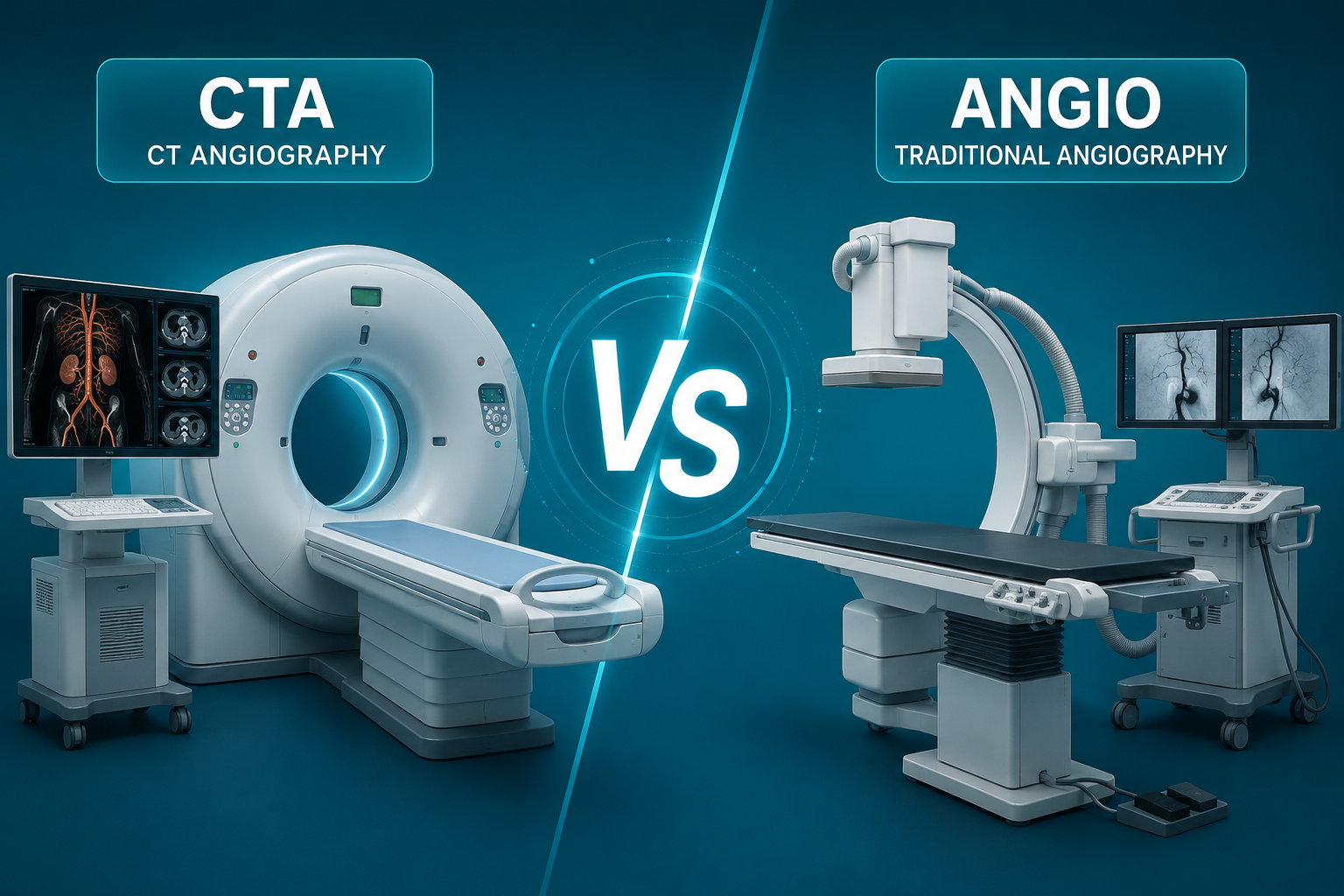
CT angiography is a non invasive imaging test that uses a CT scanner and contrast dye to create detailed images of blood vessels. It helps doctors evaluate blood flow and detect vascular disease, including plaque buildup, artery narrowing, aneurysms, and blood vessel blockages. The procedure is often used as an initial diagnostic test.
This advanced vascular disease diagnosis method produces clear three dimensional images of arteries and veins throughout the body. CT angiography for vascular disease is commonly used to assess coronary artery disease, peripheral artery disease, and carotid artery disease, helping doctors evaluate blood vessel structure accurately before planning further treatment.
Benefits of CT Angiography: Provides detailed vascular images quickly, supports early diagnosis, reduces procedural risks, helps evaluate multiple blood vessels during a single examination.
- Non invasive imaging method for vascular assessment
- Produces detailed three dimensional blood vessel images
- Helps detect artery narrowing and blockages
- Useful for evaluating several vascular conditions
- Requires no catheter insertion into arteries
- Supports faster diagnostic decision making processes
- Commonly used for initial vascular evaluation
What Is Traditional Angiography?
Traditional angiography is an imaging procedure that uses a catheter and contrast dye to examine blood vessels. Also known as catheter angiography, it has long been used to diagnose vascular disease and evaluate blood flow. The procedure involves guiding a thin catheter through a blood vessel to capture detailed real time images.
Because traditional angiography provides direct access to blood vessels, it serves both diagnostic and therapeutic purposes. Doctors can identify vascular abnormalities, narrowed arteries, and blockages while assessing circulation in real time. In certain cases, treatments such as angioplasty or stent placement may be performed immediately during the same procedure.
Benefits of Traditional Angiography: Offers real time vascular visualization, supports immediate intervention, delivers highly detailed images, assists complex diagnostic evaluations requiring direct vessel access.
- Produces real time images of blood vessels
- Allows direct visualization of blood flow
- Supports treatment during the same procedure
- Useful for complex vascular disease cases
- Provides highly detailed vascular assessment results
- Helps guide angioplasty and stent placement
- Remains important for advanced vascular evaluation
CT Angiography vs Traditional Angiography for Diagnosing Vascular Disease
Both imaging methods play an important role in diagnosing vascular disease. The choice often depends on the patient’s condition, the information needed, and whether treatment may be required during the procedure.
Doctors frequently use CT angiography as an initial imaging test, while traditional angiography may be selected when more detailed evaluation or direct intervention is necessary.
Feature | CT Angiography | Traditional Angiography |
Procedure Type | Non invasive | Invasive |
Imaging Method | CT scanner and contrast dye | Catheter and contrast dye |
Images Produced | Three dimensional images | Real time images |
Recovery Time | Usually minimal | Observation often required |
Diagnostic Scope | Broad vascular assessment | Detailed vascular assessment |
Intervention Capability | Diagnostic only | Diagnosis and treatment |
Procedure Duration | Generally shorter | Usually longer |
Situations Where Each Method Is Preferred
When CT Angiography Is Often Selected: Suitable for broad vascular evaluation, early diagnosis, detailed vessel mapping, and assessment of suspected blockages without requiring catheter insertion.
- Evaluates blood vessels throughout the body
- Detects plaque buildup and artery narrowing
- Supports early vascular disease diagnosis
- Produces detailed three dimensional vascular images
- Useful before considering invasive procedures
- Assesses aneurysms and vascular abnormalities
- Often chosen for initial imaging evaluation
When Traditional Angiography Is Often Selected: Helpful for complex vascular conditions, treatment planning, real time imaging, and situations where intervention may be needed immediately.
- Provides direct access to blood vessels
- Allows treatment during diagnostic procedures
- Delivers real time vascular imaging results
- Useful for advanced vascular disease evaluation
- Supports angioplasty and stent placement
- Helps assess complex arterial abnormalities
- Guides precise interventional procedures
Cost of CT Angiography and Traditional Angiography in Dubai
CT angiography in Dubai typically costs between AED 2,450 and AED 6,000, depending on the healthcare facility, scanner technology, and services included. Traditional angiography, also known as catheter angiography, is generally more expensive, with costs often ranging from AED 8,000 to AED 11,000 or higher because it is an invasive procedure that may require specialized facilities, medical staff, and post procedure monitoring. Actual costs can vary based on the hospital, medical condition, and insurance coverage.
Where to Get CT Angiography in Dubai
CT angiography is available at several hospitals and diagnostic imaging centers across Dubai. When choosing a provider, it is important to consider factors such as imaging technology, radiologist expertise, reporting accuracy, appointment availability, and overall patient experience. Selecting a trusted diagnostic partner can help ensure reliable results and a smooth testing process.
Amax Healthcare provides advanced CT angiography in Dubai by connecting patients with trusted diagnostic centers and experienced radiologists for safe and accurate vascular imaging. Through its network of reputable healthcare providers, Amax Healthcare helps patients access high quality diagnostic services, timely appointments, detailed reporting, and affordable care, making the process convenient and reliable from consultation to diagnosis.
Choosing the Right Vascular Imaging Test for Your Next Step
CT angiography and traditional angiography both play valuable roles in diagnosing vascular disease, but each serves different clinical needs. CT angiography is often preferred for its non invasive approach and detailed vascular imaging, while traditional angiography remains essential when direct treatment may be required. The most suitable option depends on your symptoms, medical history, and diagnostic goals. Consulting an experienced healthcare professional helps ensure the right test is selected for accurate diagnosis and timely care.
Frequently Asked Questions
Is CT angiography as accurate as traditional angiography for vascular disease?
CT angiography is highly accurate for detecting many vascular conditions, including artery narrowing and blockages. Traditional angiography may provide additional detail in complex cases and remains important when treatment decisions or interventions are being considered.
Can CT angiography detect blocked arteries?
Yes, CT angiography can detect blocked or narrowed arteries by creating detailed images of blood vessels. It helps doctors identify plaque buildup, reduced blood flow, and other vascular abnormalities that may require further evaluation.
Which vascular diseases can be diagnosed with CT angiography?
CT angiography can help diagnose coronary artery disease, peripheral artery disease, carotid artery disease, aneurysms, and other vascular disorders. It provides detailed images that assist doctors in evaluating blood vessel structure and circulation.
Why would a doctor recommend traditional angiography after CT angiography?
A doctor may recommend traditional angiography when additional detail is needed or when treatment may be required. The procedure allows direct visualization of blood vessels and can support interventions during the same session.
Does CT angiography show plaque buildup in arteries?
Yes, CT angiography can identify plaque deposits within arteries and assess their impact on blood flow. This information helps doctors evaluate vascular disease severity and determine appropriate management strategies for patients.
Can CT angiography detect aneurysms and blood clots?
CT angiography can detect aneurysms, blood clots, and other vascular abnormalities by producing detailed images of blood vessels. It is commonly used to evaluate conditions that may affect circulation and vascular health.
How do doctors decide between CT angiography and traditional angiography?
Doctors consider symptoms, medical history, suspected vascular disease, and treatment requirements when choosing between these tests. CT angiography is often used first, while traditional angiography may be selected for complex evaluations or interventions.