

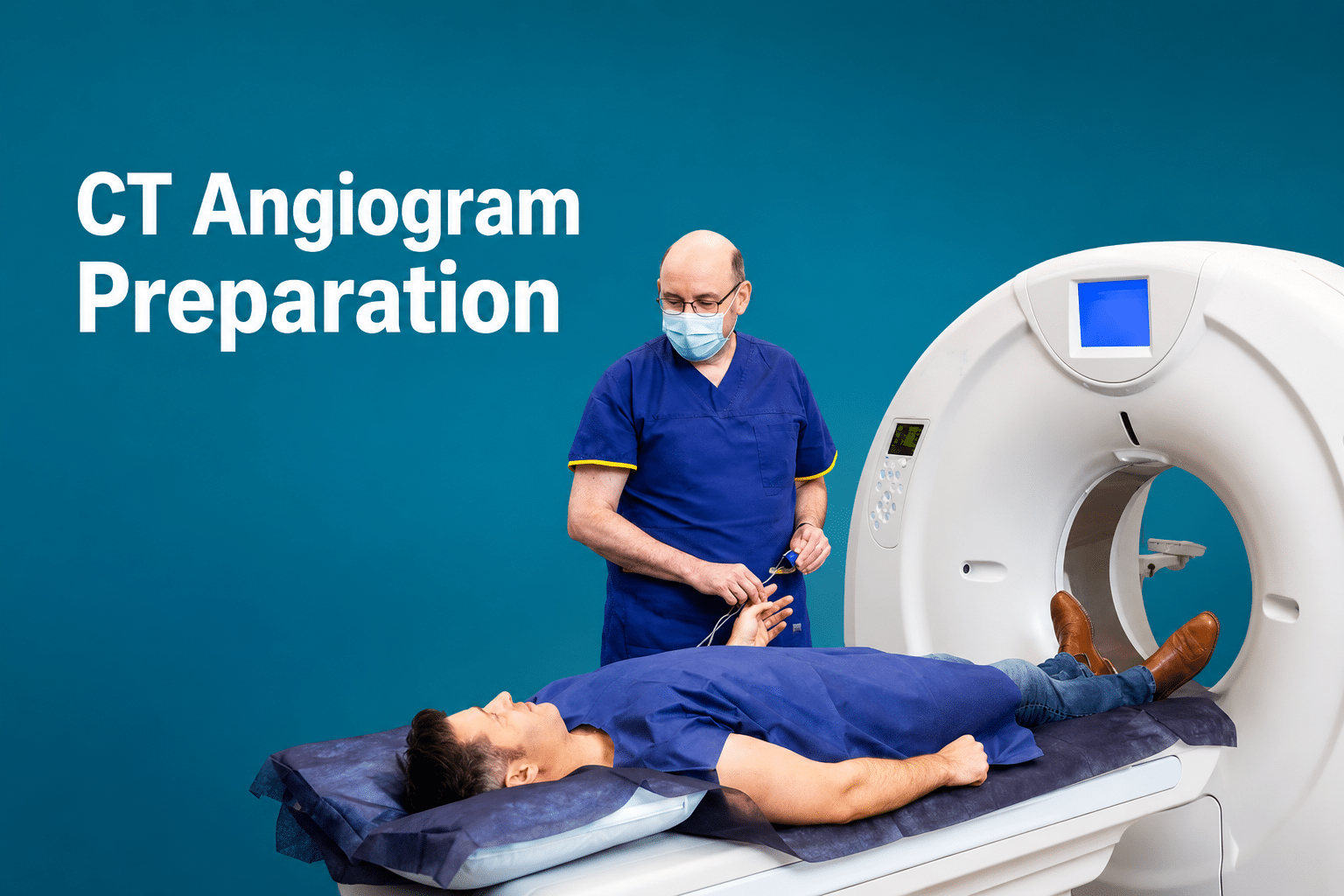
How to Prepare for a CT Angiogram: Fasting, Food, Caffeine & Medications
Need a CT Angiogram in Dubai ? Contact Us Now
A CT angiogram is an important imaging test used to examine blood vessels and blood flow in different parts of the body. Proper preparation can help produce clear images, reduce delays, and make the examination safer and more comfortable. Many patients have questions about fasting, food, caffeine, water, diabetes medicines, and other medications before a CT angiogram. Read on to know how to prepare for a CT angiogram and what to expect before the scan.
Why Is CT Angiogram Preparation Important?
Preparing correctly before a CT angiogram helps the imaging team perform the examination safely and obtain useful diagnostic images. Preparation requirements can vary depending on the type of CT angiogram, the contrast agent being used, and the patient’s medical history.
Image Quality: Clear CT angiogram images allow radiologists to assess blood vessels, their size, shape, and blood flow more accurately. Following instructions about food, caffeine, medicines, and movement can help produce suitable images.
Avoiding Delays: Following the preparation instructions given by the imaging centre can prevent unnecessary delays or rescheduling. This is especially important when the scan requires specific heart rate control, fasting, blood tests, or medication instructions.
Patient Safety: A CT angiogram commonly involves an iodine based contrast agent given through a vein. The imaging team needs to know about kidney problems, previous contrast reactions, diabetes, pregnancy, and current medicines before the examination.
How Do I Prepare for a CT Angiogram?
CT angiogram preparation depends on the body area being examined and the reason for the scan. Your healthcare provider or radiology team will give you specific instructions before the appointment. These instructions may cover fasting, medicines, blood tests, caffeine, and contrast safety.
Booking Instructions
When booking a CT angiogram, provide accurate information about your medical history, allergies, kidney problems, diabetes, pregnancy, and current medicines. Tell the imaging centre if you have previously had a reaction to CT contrast.
• Mention any previous reaction to iodinated contrast.
• Tell the centre about kidney problems or diabetes.
• Inform staff if you are pregnant or may be pregnant.
• Provide a complete list of medicines you currently take.
Medical History Disclosure
Inform the radiology team about kidney disease, heart conditions, diabetes, thyroid problems, previous contrast reactions, pregnancy, and any other significant medical conditions. This information helps the team decide whether additional precautions or testing are needed.
• Share details of previous surgeries or major medical conditions.
• Tell staff about heart conditions or abnormal heart rhythms.
• Mention any known kidney or thyroid problems.
• Report previous problems with contrast during CT scans.
Blood Test Requirements
Some patients may need a blood test to check kidney function before receiving iodinated contrast. This may be particularly important for people with known kidney disease or other risk factors for reduced kidney function.
• A kidney function test may be requested before the scan.
• The test helps assess whether contrast can be given safely.
• Bring recent kidney function results if requested.
• Follow any additional testing instructions from your healthcare provider.
Medication Review
Most regular medicines can be continued unless your healthcare provider gives different instructions. Some patients, especially those taking certain diabetes medicines or medicines that affect heart rate, may receive specific instructions before the scan.
• Do not stop prescribed medicines without medical advice.
• Ask about diabetes medicines if fasting is required.
• Follow instructions about medicines used to control heart rate.
• Tell the imaging team about all prescription and over the counter medicines.
What Should You Not Do Before a CT Angiogram?
Certain activities or foods may interfere with preparation for some types of CT angiography. Always follow the instructions provided for your particular examination.
Eating When Fasting Is Required: Some CT angiograms require fasting for several hours before the scan. Eating shortly before the appointment when fasting has been instructed may cause the examination to be delayed or rescheduled.
Drinking Caffeine: Caffeine may need to be avoided before some cardiac CT angiograms. Coffee, tea, energy drinks, cola, and other caffeinated products can increase heart rate and may affect image quality during certain heart scans.
Stopping Medicines Without Advice: Do not stop prescribed medicines on your own. Some CT angiogram examinations require particular medicines to be continued, adjusted, or temporarily withheld. Your healthcare provider should give you these instructions.
Ignoring Contrast Instructions: Tell the imaging team about any previous reaction to iodinated contrast. Do not assume that a previous reaction is unimportant, even if it was mild.
What to Do the Night Before a CT Angiogram
Simple preparation the evening before your appointment can help you arrive ready for the examination.
- Follow the fasting instructions provided by the imaging centre.
- Avoid caffeine if your CT angiogram instructions require caffeine restriction.
- Take regular medicines only as instructed by your healthcare provider.
- Keep your previous imaging reports and relevant medical records ready if requested.
- Review your appointment time and location carefully.
- Arrange any required blood tests before the scan.
- Ask about diabetes medicine instructions if you take medicines for diabetes.
- Get adequate sleep, particularly if you are having a cardiac CT angiogram.
CT Angiogram Preparation: Important Steps Before Your Scan
Most CT angiograms involve several standard preparation steps. These help the radiology team assess your medical history, prepare the contrast injection, and obtain clear images.
Tell the Team About Allergies: Tell the radiology team about any previous reaction to iodinated CT contrast. Also mention significant allergies and any previous problems during imaging examinations.
Check Your Kidney Health: Kidneys remove iodinated contrast from the body. Patients with reduced kidney function may need additional assessment before contrast is given. Tell your healthcare provider if you have kidney disease or have previously had abnormal kidney function tests.
Tell Staff If You Are Pregnant: Tell your healthcare provider or radiology team if you are pregnant or think you may be pregnant. CT uses ionizing radiation, so the healthcare team will consider the potential benefits and risks before proceeding.
Choose Comfortable Clothing: Wear comfortable clothing and follow the imaging centre’s instructions about jewellery and other objects. Depending on the scan, you may be asked to change into a hospital gown.
Get Ready for Contrast Injection: A small intravenous cannula is usually placed in your arm or hand so the contrast agent can be injected during the scan. You may briefly feel warmth or a flushing sensation when the contrast enters your body. This usually passes quickly.
Need a CT Angiogram in Dubai?
Advanced imaging, experienced radiologists, and affordable diagnostic care.
Book Your CT AngioCT Angiogram Fasting Guidelines
Fasting requirements for CT angiography are not the same for every patient. Some examinations require several hours without food, while others may have less restrictive instructions. Always follow the instructions provided for your specific scan.
When Fasting Is Required
Fasting may be requested before certain CT angiograms, particularly some cardiac CT examinations or scans where specific preparation is needed. The imaging centre should tell you how long you need to avoid food.
Do not assume that every CT angiogram requires the same fasting period. The required time can depend on the scan protocol and the facility’s instructions.
What Food Can I Eat Before a CT Angiogram?
If fasting is not required, you can usually continue your normal diet unless your healthcare provider has given you different instructions.
If fasting is required, avoid solid food during the specified fasting period. Do not eat a heavy meal shortly before a scan simply because you were not given detailed dietary instructions. If you are unsure, contact the imaging centre before the appointment.
Can I Drink Water Before a CT Angiogram?
Water is often allowed before CT angiography, but this depends on the examination and the instructions from the imaging centre. Staying adequately hydrated may be encouraged in some patients receiving iodinated contrast, particularly when there are no fluid restrictions for another medical reason.
Do not deliberately drink large amounts of water if you have been given fluid restrictions because of another health condition.
Why Can’t You Drink Coffee Before a CT Angiogram?
You may be asked to avoid coffee before a cardiac CT angiogram because caffeine can increase your heart rate. A slower, steady heart rate helps the scanner capture clearer images of the coronary arteries. Caffeine restriction is not required for every CT angiogram, so follow the instructions given for your specific scan.
If you have been told to avoid caffeine, do not consume:
- Coffee and espresso
- Tea, including black and green tea
- Energy drinks
- Cola and other caffeinated soft drinks
- Caffeinated chocolate and cocoa products
- Pre workout drinks and stimulant drinks
- Other products containing added caffeine
Even decaffeinated coffee and tea may contain small amounts of caffeine. If your cardiac CT team has instructed you to avoid caffeine completely, ask them whether these products should also be avoided.
CT Angiogram With Contrast Preparation
Most CT angiograms use an iodine based contrast agent to make blood vessels easier to see. Before contrast is given, the imaging team may review your medical history and kidney function.
- Know What to Expect From Contrast: The contrast agent is injected into a vein during the examination. It travels through the bloodstream and helps blood vessels appear more clearly on CT images. A temporary warm feeling, flushing, or metallic taste can occur after the injection. These sensations usually disappear quickly.
- Check Your Kidney Function: Some patients need a blood test to assess kidney function before contrast administration. The need for testing depends on your medical history, kidney function, age, and local imaging protocols.
- Report Previous Contrast Reactions: Tell your healthcare provider if you have previously experienced a reaction after receiving iodinated contrast. A previous reaction does not automatically mean that you cannot have a CT angiogram, but the radiology team may need to take additional precautions.
- Tell Staff About Thyroid Conditions: Tell your healthcare provider if you have a thyroid condition, particularly if you are receiving iodinated contrast. Your medical history can help the healthcare team decide whether any additional precautions are appropriate.
Can You Take Your Medications Before a CT Angiogram
Medication instructions can vary depending on the type of CT angiogram and the medicines you take. Never change a prescribed medicine without medical advice.
Regular Medicines
Many patients can continue their usual medicines before a CT angiogram. However, follow the specific instructions given by your doctor or imaging centre.
Diabetes Medicines
People with diabetes may receive special instructions about food, insulin, or other diabetes medicines if fasting is required. This is important because fasting can affect blood glucose levels.If you take diabetes medication, tell the imaging centre before your appointment rather than deciding on your own whether to take it.
Heart Rate Medicines
Some patients having a coronary CT angiogram may be given medicine to slow the heart rate before the scan. This helps reduce heart motion and can improve the quality of the coronary artery images.Your healthcare provider will decide whether this medicine is appropriate based on your heart rate, blood pressure, medical history, and current medicines.
Blood Thinners
Patients taking blood thinning medicines should inform the imaging team. These medicines usually do not need to be stopped simply because a CT angiogram is being performed, but your healthcare provider should know about them.
Cardiac CT Angiogram Preparation
Cardiac CT angiogram preparation can involve more specific instructions than some other types of CTA. Patients may be asked to avoid caffeine, fast for a specified period, and follow instructions about medicines that control heart rate.
Tell the imaging team about heart conditions, previous heart procedures, allergies, kidney problems, and all medicines you take. A controlled heart rate can be important because movement of the heart can make coronary artery images less clear.
If you’re considering a heart scan, read our guide to CT angiogram heart scans, how they work, and what to expect: CT Angiogram Heart Scan: Complete Guide
CT Pulmonary Angiogram Preparation
A CT pulmonary angiogram, also called CTPA, is commonly used to examine the blood vessels in the lungs and can help detect pulmonary embolism.
Preparation usually focuses on safe contrast administration and accurate imaging. Tell the imaging team about kidney disease, previous contrast reactions, pregnancy, and current medicines. Follow any fasting or fluid instructions given for your appointment.
CT Coronary Angiogram Preparation
A CT coronary angiogram examines the coronary arteries that supply blood to the heart. Preparation may include avoiding caffeine, fasting for a specified period, and taking medicines as instructed to control the heart rate.
The exact requirements can vary between patients. People with certain heart conditions, low blood pressure, asthma, or medication allergies may need different instructions.
CT Angiogram Head and Neck Preparation
A CT angiogram of the head and neck can examine blood vessels supplying the brain and neck. It may be used when doctors need to investigate narrowing, blockages, aneurysms, or other vascular abnormalities.
Patients should provide information about previous contrast reactions, kidney disease, pregnancy, and current medicines. Follow the imaging centre’s instructions regarding fasting and fluid intake.
CT Angiogram Abdomen and Pelvis Preparation
CT angiography of the abdomen and pelvis can assess blood vessels such as the aorta and its branches. Preparation may vary depending on the clinical reason for the scan and the imaging protocol.
Some patients may receive fasting instructions before the examination. Your healthcare provider may also review kidney function before iodinated contrast is administered.
CT Angiogram of the Legs and Arms Preparation
CT angiography can be used to examine blood circulation in the arms and legs and identify narrowed or blocked arteries.
Preparation is usually straightforward, but patients should still provide information about kidney disease, allergies, pregnancy, and previous contrast reactions. Follow any specific food, fluid, or medication instructions given before the scan.
What Happens During a CT Angiogram?
Before the scan, a radiology professional will confirm your details, review relevant medical information, and place an intravenous cannula for contrast injection.
You will lie on the CT table while it moves through the scanner. The contrast agent is injected at the appropriate time, and you may be asked to hold your breath briefly during some scans.
The examination itself is usually quick. It is important to remain still and follow breathing instructions so the scanner can capture clear images.
After the scan, the IV cannula is removed. Unless you have been given different fluid instructions, you can usually return to your normal activities. Drinking water may help maintain normal hydration after contrast administration.
Make Your CT Angiogram Preparation Smooth and Safe
Preparing for a CT angiogram is usually straightforward, but the exact instructions depend on the scan and your medical history. Fasting may be required for some examinations, while caffeine restriction can be important for certain cardiac CT angiograms. Medicines, diabetes, kidney function, previous contrast reactions, pregnancy, and other health conditions should be discussed with the imaging team. If you are unsure about food, coffee, medicines, or water, contact the imaging centre before your appointment for guidance.
Safe, Trusted and Affordable CT Angiogram in Dubai
Amax Healthcare provides advanced CT angiogram services in Dubai by connecting you with trusted centres and experienced radiologists for safe, accurate diagnostics. We help patients access modern CT angiography, professional imaging care, and reliable diagnostic support at affordable prices. Our experienced team can guide you through booking and preparation, making it easier to choose a suitable centre for your needs. With convenient coordination and quality focused care, Amax Healthcare makes your CT angiogram journey simpler and more reassuring.